Original Coverage & Source Attribution: www.mk.co.kr
While the artificial intelligence (AI) bubble theory has emerged as a hot topic in the global financial market, criticism of excessive market expectations for AI and counterargument that the valuation of major technology stocks was reasonable at the “2026 New York Global Financial Leadership Forum.” While sympathizing with AI’s long-term growth potential, there was a difference of opinion on whether short-term expectations outpaced performance and business reality.
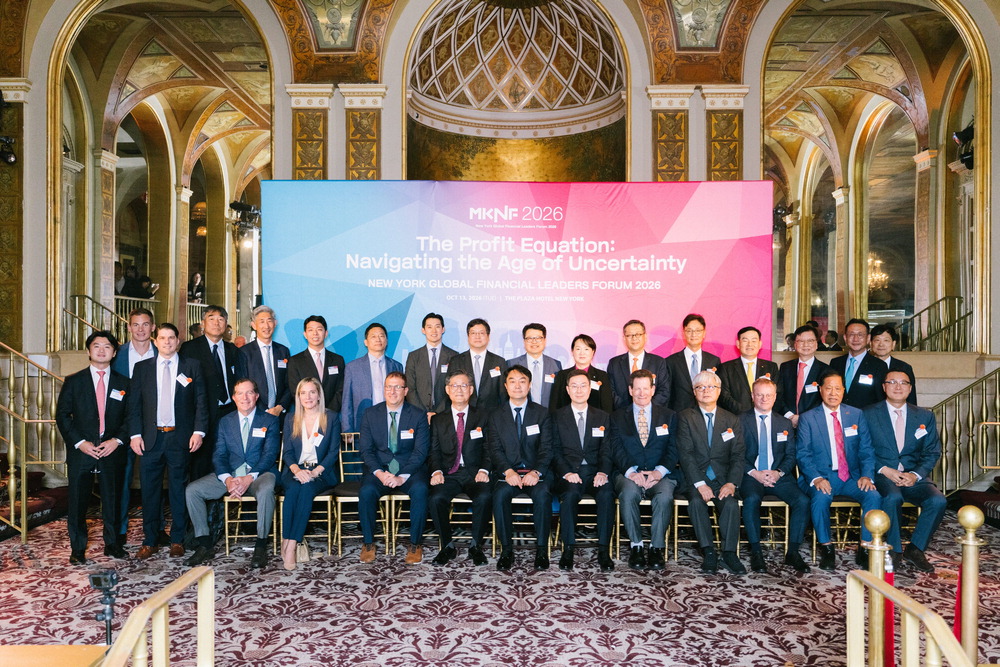
Ken Fisher, founder of global asset management firm Fisher Investment, who attended the “2026 New York Global Financial Leaders Forum” held at The Plaza Hotel in New York on the 13th (local time), diagnosed that market expectations for AI have gone too far. “AI will continue to create new things for decades to come, but so far, market expectations have been too high and the pace of change has been too fast,” he said.
Fisher Investment is one of the world’s leading registered investment advisors (RIAs) serving more than 170,000 individual and institutional customers in 15 countries.
Chairman Fisher explained that the capital expenditure (CAPEX) of Google, Amazon, Meta, and Microsoft (MS), the four U.S. big tech companies, amounted to $750 billion (about 1,000 trillion won). This is half of the total capital expenditures of the remaining 496 companies out of 500 companies incorporated into the S&P 500 index.
He did not deny the long-term potential of AI itself. The problem is that the possibility of technology development and the realization of the performance expected by the market may be different. If AI fails to bring profit and productivity improvement at the pace investors expect, high expectations could rather act as a stock price burden.
Social conflict over the expansion of AI infrastructure was also pointed out as a variable. As the data center is blamed for the increase in power and water bills, damage to the environment, and noise, related infrastructure construction could be put on hold. “The longer the data center construction plan takes and the greater the concern, the more serious the problem will become,” Fisher said.
He also stressed that the stock market reflects near-future performance and changes before long-term technological advances. “What the stock market thinks is important is that it will happen in the next three to 30 months,” Fisher said. “What happens in five or 10 years is reflected in the market when that point approaches.” “From this point of view, expectations for AI six to nine months ago were excessive,” he added.
On the other hand, WisdomTree Chief Investment Officer Jeremy Schwartz positively evaluated AI’s long-term growth potential and the stock price level of key technology stocks. “We are very optimistic about the changes that AI will bring in the long run,” he said. “Although there are bubble theories in the market and questions about the rationale to support the rise, I think the valuation of major technology stocks is quite reasonable.”
CIO Schwartz cited the fact that the price-to-earnings ratio (PER) of major technology stocks called “Magnificent 7” is 24 times higher. He explained, “We have proposed a long-term appropriate PER of the S&P 500 index at 20 times, and the valuation of major technology stocks does not deviate significantly from this standard.” He then stressed, “It is difficult to conclude that large technology stocks are in a bubble.”
The burden of financing due to the expansion of investment in AI infrastructure is also acknowledged by optimists. “Hyperscalers and data center operators may have as much as $2.5 trillion in funding to support their growth plans in the short term,” said Lauren Basmajian, global head of Carlyle Credit Division.
However, he believed that even if the investment scale is huge, the existing business base of companies should be considered. “Technology companies have a solid real business, so they will be able to afford it even if they waste huge amounts of money,” Basmajian Global Head said. The intention is that even if AI investment performance does not meet expectations, existing businesses can serve as a buffer.
Fisher advised that investment decisions should distinguish between information that is already known to the market and information that is not. “Information that everyone is talking about is often reflected in market prices,” he said. “At times like this, we need to find the operating principles of the market that others do not see or believe because of bias.” Differentiation and profitability were cited as criteria for selecting good companies. “We look at two main criteria: whether the company does something that no other company does, and whether it generates operating profit from that work,” Fisher said. Regarding Korea, he said, “It is a country ranked 4th to 5th in the world in the Global Innovation Index,” adding, “If these standards are applied, the future is quite bright.”
[New York Special Report Team = Lee Seung-hoon (Team Leader) / Lim Sung-hyun / Reporter Moon Ji-woong / Reporter Hong Hye-jin / Reporter Lee Na-yeon / Washington Correspondent Choi Seung-jin / Reporter Jeon Kyung-woon / Reporter Cha Chang-hee]