Original Coverage & Source Attribution: www.leadersleague.com
Virtual influencers, licensed digital doubles and AI assistants that recommend what to buy are reshaping brand communication faster than the law. Watch our video interview to discover where creativity ends and deception begins, and who is taxed on a digital identity.
For years, the legal debate on influencer marketing has revolved around one question: is the sponsorship clearly disclosed? Artificial intelligence is now adding new ones. Avatars that post, reply and give advice like real people, creators who license their entire image to generate a virtual double, chatbots that suggest products without explaining why.
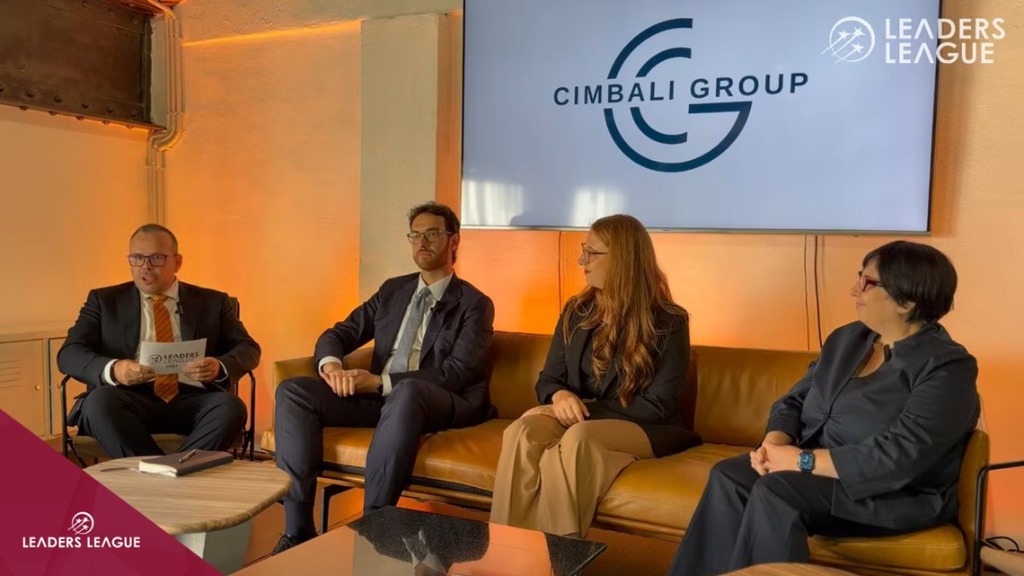
In our latest Legal Espresso Talks episode, recorded at the Cimbali Group Flagship in Milan ahead of the event “IP Risk Management: How Intellectual Property Protects Business Value”, organised by Cimbali Group and ICEN Risk, Elisa Scibilia (Senior Associate at Perani Pozzi Associati), Mariangela Bogni (Partner at IP Law Galli) and Paolo Savarese (Tax Lawyer) explore the intellectual property, regulatory and tax questions behind this shift.
From Real Faces to Virtual Doubles
Virtual influencers already behave online much like their human predecessors: they post content, publish stories, give advice and answer comments and private messages, in ways that are increasingly hard to tell apart from a real person. Brands are starting to create their own single brand influencers, and a new model is emerging. “There has already been a case of an influencer who decided to license not just individual images, but his entire image, poses and gestures, in order to generate a virtual double through artificial intelligence, which will coexist with him online,” explains Elisa Scibilia.
For Mariangela Bogni, these tools should not be blocked: they allow young brands without large budgets to reach consumers, and help established fashion houses reconnect with younger audiences. The risk lies in the trust that underpins influencer marketing. “If someone puts their face on a product, consumers tend to believe they have actually experienced it. With a virtual influencer perceived as real, that mechanism is distorted, because there is no person with a reputation to lose.” In her view, the transparency duty in Article 50 of the AI Act applies, since interacting with followers is precisely a virtual influencer’s function. The same issue arises when a person licenses their image entirely and loses control over the products it promotes, a problem familiar from disputes over fashion brands bearing a designer’s name after the designer has left.
Who Is Taxed on a Digital Identity?
There is no specific tax regime for virtual influencers, nor for human creators. Paolo Savarese therefore turns to existing categories, likening the creator behind an avatar to a screenwriter or director. Where the avatar is protected by copyright, the income is treated as income from independent work, with a flat reduction of the taxable base of 25% to 40% depending on the creator’s age. When rights are transferred to an image rights company, “there must be real economic substance, otherwise the tax authority attributes the income back to the individual”. Social security is also an open point: Italy’s social security institute has recently linked creators to the fund for entertainment workers, but it remains unclear whether this applies to the creators of virtual influencers.
When the Influencer Is a Chatbot
With chatbots, Scibilia notes, the risk is the opposite: consumers may not realise that a seemingly neutral machine is performing the same economic function as an influencer, through an algorithm whose criteria remain opaque. Bogni points to a recent development. On 31 August 2026, the European Commission designated ChatGPT as a Very Large Online Search Engine under the Digital Services Act, triggering transparency duties on recommender systems, including an explanation of the main parameters behind each suggestion. It is less clear whether these rules cover a one-to-one conversation with an AI assistant, or how consumer protection law applies to a chatbot embedded in an online marketplace. The Digital Fairness Act, expected from the European Commission by the end of the year, may help close these gaps.
The tax dimension is equally open. If creators were ever paid for content used to train AI models, Savarese explains, that income would follow the same rules as their other copyright income, and so would any damages awarded in its place. He also raises a broader question. Users of free AI platforms are likely being profiled, much as with social networks, whose free accounts the Italian tax authority has in the past treated as paid for with users’ data. “Am I really using that platform for free?” he asks.
Three Pieces of Advice for Brands
1. Put it in writing: define every relationship by contract, including with employees who lend their face or movements to a campaign, and verify the counterparty’s tax position before paying (Paolo Savarese).
2. Protect image rights: newer contracts increasingly include clauses that prevent a person’s image from being fed into AI platforms, even in paid versions (Elisa Scibilia).
3. Make legal and marketing work together: “Incidents always cost more to fix afterwards than to prevent” (Mariangela Bogni).
Watch the full video interview to explore how the law is adapting to AI driven influence.
Legal Espresso Talks is a Leaders League video series, recorded in collaboration with Cimbali Group.
External content is blocked. Change my cookie preferences to display it.