Original Coverage & Source Attribution: www.wcn247.com
NEW WILMINGTON, Pa – I get many questions about the solar panel sitting beside the tiny house, and it sparked my interest to learn more about it myself. I sat down with Dr. Helen Boylan-Funari to gather some information on the Tiny House Solar Panel.
Q: “Was the solar panel constructed at the same time as the tiny house, or was it installed as a project after the tiny house was built?”
A: “The solar panel was installed as an educational resource and sustainability project in 2019 about two years after the tiny house was constructed in 2017.”
Q: “How does the solar panel operate and is there anything specific we should know?”
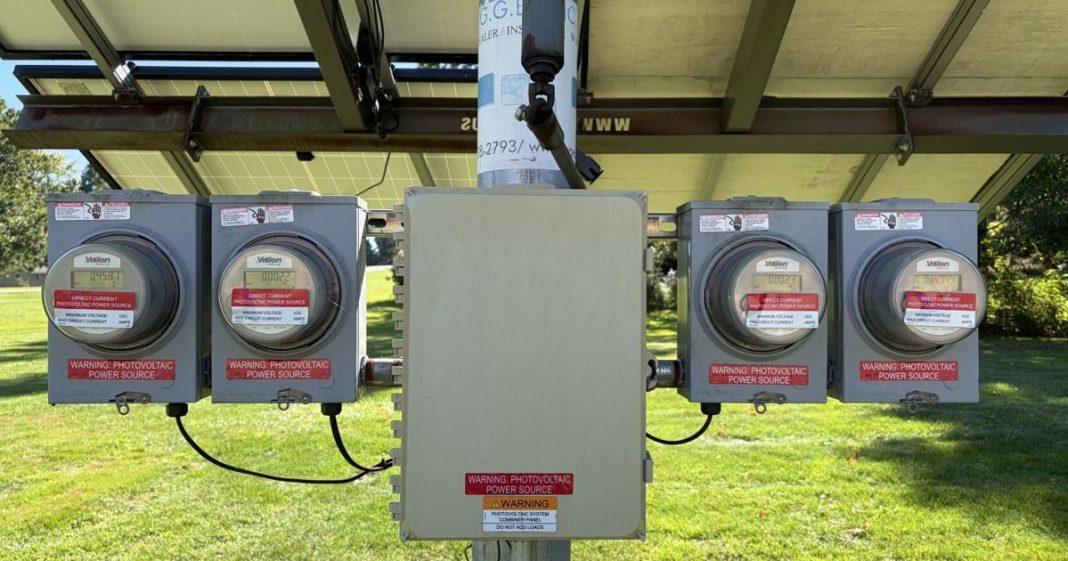
A: “The system is made up of polycrystalline, monocrystalline, and thin film solar panels. The system feeds into the power grid, and not just to the tiny house itself.”
Polycrystalline, monocrystalline, and thin film solar panels all have differences in uses, efficiencies, and lifetimes.
Polycrystalline solar panels are made of photovoltaic cells made up of silicon crystals of different sizes. The solar panels convert sunlight energy at around a 15%-19% efficiency; the panels are best used for large residential roofs and have a lifetime of around 25-35 years.
Monocrystalline solar panels contain photovoltaic cells that are made of silicon crystals of relatively the same size. These panels convert sunlight energy at a 20%-24% efficiency; they’re best used for limited roof space and have a lifetime of 25-30+ years.
Thin film solar panels are made up of thin layers of microscopic layers of light absorbing materials. These are made by spraying layers of light absorbing materials rather than using solid silicon crystal wafters like what is used in monocrystalline and polycrystalline solar panels. These panels convert energy around 10%-18% efficiency, however, they are more efficient at picking up solar rays on cloudy days. These panels are best used for RV or boat setups and have a lifetime of 10-20 years.
The system beside the tiny house is made up of all three types, polycrystalline, monocrystalline, and thin-film panels. The solar panel stands to the left of the tiny house and is on pole mount with a manual tilting system. The panel tilts throughout the day to maximize the amount of sunlight energy available for the solar panel system. The power generated feeds into the surrounding power grid, not the tiny house itself.
Even though the solar panel system beside the tiny house doesn’t power the tiny house directly, I do believe that areas that get more sunlight more often could use a solar power system to adequately provide electricity for a tiny home setup.
The tiny house solar panel has its own data website that you can explore using this link:https://enlighten.enphaseenergy.com/web/RnMR1593616/today/graph/hours?public=1
Solar panels are compact and prove to be efficient in areas that get a lot of sunlight yearly. This practice could bring more of a reality to a more self-sustainable way of living!