



Original Coverage & Source Attribution: www.creativescotland.com
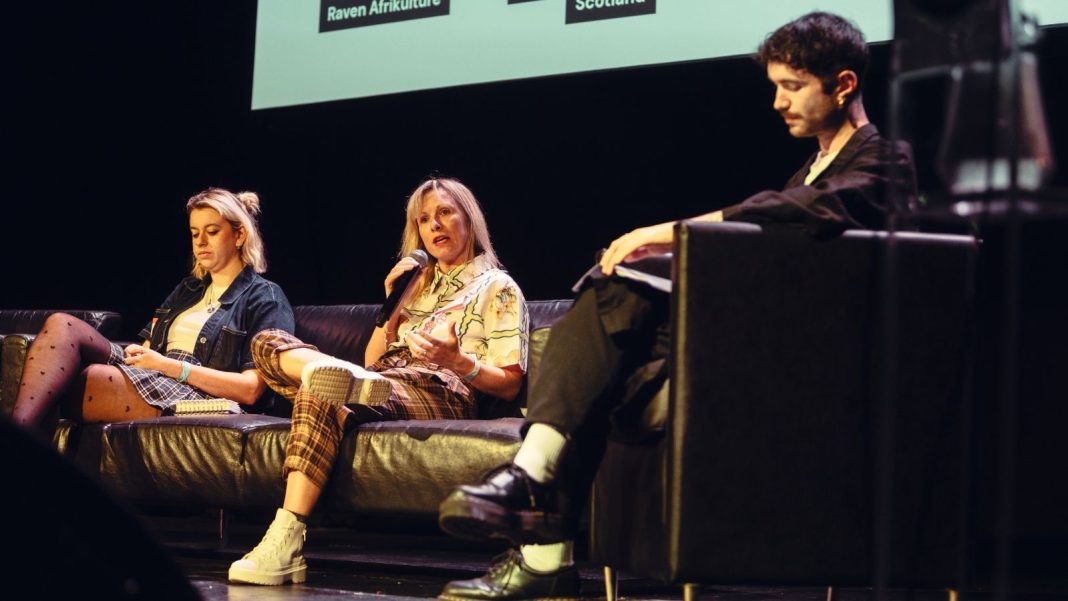
The Scottish Music Industry Roadmap 2026–30 has gone live. Photography by Daniel Blake.
Developed with the sector, the Scottish Music Industry Roadmap 2026–30 sets a shared direction to move beyond short-term survival towards sustainable careers, stronger businesses and thriving music communities.
The Scottish Music Industry Association (SMIA) has launched the ‘Scottish Music Industry Roadmap 2026–30’, a national strategy shaped around Scotland’s distinctive and diverse music industry and the people who sustain it.
Covering all genres, the Roadmap brings commercial, publicly funded, educational and community music activity into one shared framework. It connects the development of music careers and businesses with the infrastructure, audiences and public policy that support them.
Published on Tuesday 6 October, the Roadmap sets out eight national priorities and calls on the Scottish Government, public bodies, funders and the industry to work together on the policy, investment and practical changes needed to take them forward. Development of the Roadmap was supported by Creative Scotland through the SMIA’s Multi-Year Funding, with UK Music contributing partnership support.
The launch follows the UK Government’s ‘Turn It Up: Our plan for music’, published in July alongside a £45 million Music Growth Package. While the package creates some opportunities for Scotland-based artists and businesses, its scope to support development focused within Scotland is limited. With culture and many areas of music-sector development devolved, Scottish Government engagement and support are essential to strengthen the industry within Scotland alongside access to UK-wide opportunities.
The Roadmap provides a Scottish strategy for that development. The SMIA is inviting the Scottish Government and public bodies to work with the sector on taking the Roadmap forward, using its evidence and priorities to inform policy and investment, and agree where coordinated action can strengthen music’s development across Scotland.
For music organisations with a UK-wide remit, the Roadmap provides evidence and priorities they can use to strengthen their work in Scotland. It offers a shared basis for developing partnerships and shaping programmes, advice and funding opportunities around the needs of Scotland-based music makers, professionals and businesses.
Music’s success brings substantial benefits to Scotland. UK Music estimates that music tourism generated £937 million in direct and indirect spending in Scotland in 2025. [1] Alongside that contribution, parts of the sector remain financially fragile: Music Venue Trust’s 2025 Scottish figures show that only 33% of grassroots music venues reported a profit. [2] The Roadmap addresses wider pressures including insecure work, irregular income, gaps in business support and limited resources for development.
Decisions across culture, enterprise, education, skills, planning and transport shape the conditions in which music operates. The Roadmap provides a shared framework for tackling challenges that no single organisation can address alone. It connects existing work, identifies gaps and clarifies responsibilities to guide policy and investment towards agreed needs, with local action shaped by local people and organisations.
Across its eight national priorities, the Roadmap seeks to:
- Make music careers more sustainable, through fairer pay, clear contracts, timely payment, safer working conditions and stronger routes into paid work and career progression.
- Move from short-term survival towards long-term development, through more strategic investment and funding arrangements that better reflect staffing and operating costs, and provide greater certainty to plan.
- Strengthen the industry around Scotland’s musical talent, including management, booking agencies, labels, publishing, rights and specialist business support, so more income, expertise and intellectual property can be retained and reinvested in Scotland.
- Give music greater weight in Scotland’s future, recognising its cultural, social and economic contribution in decisions affecting education, enterprise, tourism, communities and international relationships.
Developed over two years, the Roadmap draws on SMIA member engagement, evidence gathered at the SMIA Summit in 2024 and 2025, stakeholder feedback and wider sector research.
Robert Kilpatrick, CEO and Creative Director, Scottish Music Industry Association (SMIA), said: “We often hear that Scottish music punches above its weight. We should be proud of what we achieve, but we also need to ask what it takes from the people making it possible. For too long, too many across our sector have had to focus on survival rather than development.
“An authentic Scottish strategy is essential for a distinctive and diverse Scottish music industry. With culture devolved, we need a shared direction for the decisions and investment that Scotland can take forward itself, alongside effective access to UK-wide support. This Roadmap gives us that direction, shaped with the people it aims to support.
“We want government, public bodies and funders to work with us to put it into practice. People across the sector can also use it in their own work, build partnerships and take action. Scotland’s music industry and cultural identity are shared, and shaping their future takes all of us.”
Alan Morrison, Head of Music at Creative Scotland, said: “Scotland’s incredible musicians deserve to be seen and heard by eager audiences at home and abroad. However, if Scotland is to provide a strong, sustainable and supportive environment for our artists, all aspects of our music sector need to work together on their behalf.
“The SMIA is well positioned to be the bridge between funding bodies and the commercial industry, with a voice that is heard and respected at government level. The annual SMIA Summit offers a space where the music sector can meet on equal terms to identify challenges and put forward solutions, with the Scottish Music Industry Roadmap now providing a vision for a future that benefits us all.”
Tom Kiehl, Chief Executive, UK Music, said: “For generations, Scotland has produced some of the biggest and best acts on the planet, from Annie Lennox, Biffy Clyro and Texas, to Lewis Capaldi, Franz Ferdinand and Calvin Harris, contributing enormously to the £8 billion the UK music industry generates for the economy and the 220,000 jobs it supports.” [3]
“This Roadmap will play a vital role in ensuring that the right infrastructure exists to nurture and develop new talent and support music businesses for many years to come.”
Equity, diversity, inclusion and accessibility, Fair Work and environmental sustainability underpin all eight priorities. The Roadmap sits alongside the SMIA’s Scottish Music EDIA Manifesto and Action Framework, published earlier this year, which supports practical action to make the industry more equitable and accessible.
The SMIA will coordinate a shared implementation programme, supported by an independent Roadmap Advisory Group to be recruited later in 2026. Annual plans will identify agreed work, responsibilities and resources, with public reporting on progress. Businesses, organisations and communities can also take forward activity independently through their own plans and partnerships.
The SMIA Summit 2026 will be the first major national conversation following publication of the Roadmap, taking place on Thursday 8 October at the Old Fruitmarket in Glasgow. Artists, industry professionals, organisations, policymakers, researchers and sector leaders will come together to explore what the Roadmap means in practice, what needs to change and what can happen next.
The programme combines keynotes and panel discussions in its Conference Centre with practical skills sessions in its Training Centre. An invitation-only Policy Centre will provide space for focused discussions on specific Roadmap priorities and how they can be turned into action.
In subsequent years, the SMIA Summit will provide an annual opportunity for the sector to review progress against the Roadmap, discuss what needs to improve, identify emerging issues and help shape priorities for the year ahead.
These discussions will inform future implementation plans, with the SMIA explaining through its planning and reporting how contributions have influenced the work.
The Roadmap and accompanying Evidence Base and Methodology publication are available to view and download via the SMIA website.
Background
Sources for statistics
[1] Music tourism: UK Music, Music Tourism Data Map, Scotland, 2025. The £937 million estimate covers direct and indirect spending associated with visitors attending live music events in Scotland; it is not a valuation of Scotland’s entire music industry. Scotland 2025 data | Music Tourism Methodology 2026, pp. 2–4
[2] Grassroots venues: Music Venue Trust, Annual Report 2025, pp. 28–29. The Scottish overview, covering 68 trading Music Venues Alliance venues, reports 33% making a profit. The remainder includes venues breaking even as well as those making a loss. Read the report
[3] UK economic contribution and employment: UK Music, This Is Music 2025, pp. 8–9. The figures in Tom Kiehl’s quote refer to £8 billion in gross value added and 220,000 full-time-equivalent jobs across the UK music industry in 2024. Report and methodology
About the Scottish Music EDIA Manifesto and Action Framework
Published by the SMIA in 2026, the Scottish Music EDIA Manifesto and Action Framework were developed with an independent EDIA Advisory Group and consultation across Scotland’s music industry. The Manifesto sets out shared commitments to equity, diversity, inclusion and accessibility. The accompanying Action Framework provides guidance and tools organised around investment, training and feedback, supporting voluntary action proportionate to different roles and resources. Read the Manifesto and Action Framework
About The Scottish Music Industry Association (SMIA)
The Scottish Music Industry Association (SMIA) is a not-for-profit trade body and membership organisation which exists to strengthen, empower and unite Scotland’s music industry.
We work to create and nurture an inclusive membership community which reflects the full spectrum of Scotland’s music industry. We give voice to our membership when speaking to Government, Parliament and development organisations, and we both produce and support projects and programmes that stimulate sustainability, domestic and international growth, development and innovation in Scotland’s music sector. Our services, projects and events are designed to strengthen and increase the value of Scotland’s music industry on the world stage; economically, socially and culturally.
The SMIA receives Multi-Year Funding from Creative Scotland, the public body that supports the arts, screen and creative industries across all parts of Scotland on behalf of everyone who lives, works or visits here.
For further information on the SMIA and its services, projects and events please visit the SMIA website.
Keep up to date with the SMIA across our social media channels: Twitter|Facebook|Instagram
About Creative Scotland
Creative Scotland is the public body that supports culture and creativity across all parts of Scotland, distributing funding provided by the Scottish Government and The National Lottery. Further information at creativescotland.com. Follow Creative Scotland on Facebook, LinkedIn, and Instagram.
About UK Music
UK Music is the collective voice of the UK’s world-leading music industry. We represent all sectors of our industry – bringing them together to collaborate, campaign, and champion music. The members of UK Music are: AIM, BPI, FAC, The Ivors Academy, MMF, MPA, MPG, MU, PPL, PRS for Music.