



Original Coverage & Source Attribution: www.thehitavada.com
Business Reporter :
Witnesses dramatic decline of nearly 40% on y-o-y basis
The prevailing global geopolitical conditions and ongoing international turbulence have severely impacted the region’s export-import (EXIM) trade, casting a deep shadow over once-thriving commercial channels. Once flourishing on the back of robust global demand and steady logistics, the regional export of rice has been witnessing a dramatic decline of nearly 40 per cent on a year-on-year basis.
Local traders and agricultural suppliers who previously capitalised on international markets are now grappling with mounting trade barriers and unsustainable operating costs.
Elaborating on the primary drivers behind this sharp downturn, Sudhir Agrawal, one of the leading custom clearing agents in the region, stated that the fall in outbound shipments is mainly due to exorbitantly high ocean freight charges. He explained that the ongoing geopolitical turbulence around key international maritime routes has pushed up ocean freight charges by more than 50 per cent. This spike in transportation overheads has negatively impacted the overall viability of exporting low-value agricultural commodities like rice, where profit margins are slim and sensitive to shipping fluctuations.
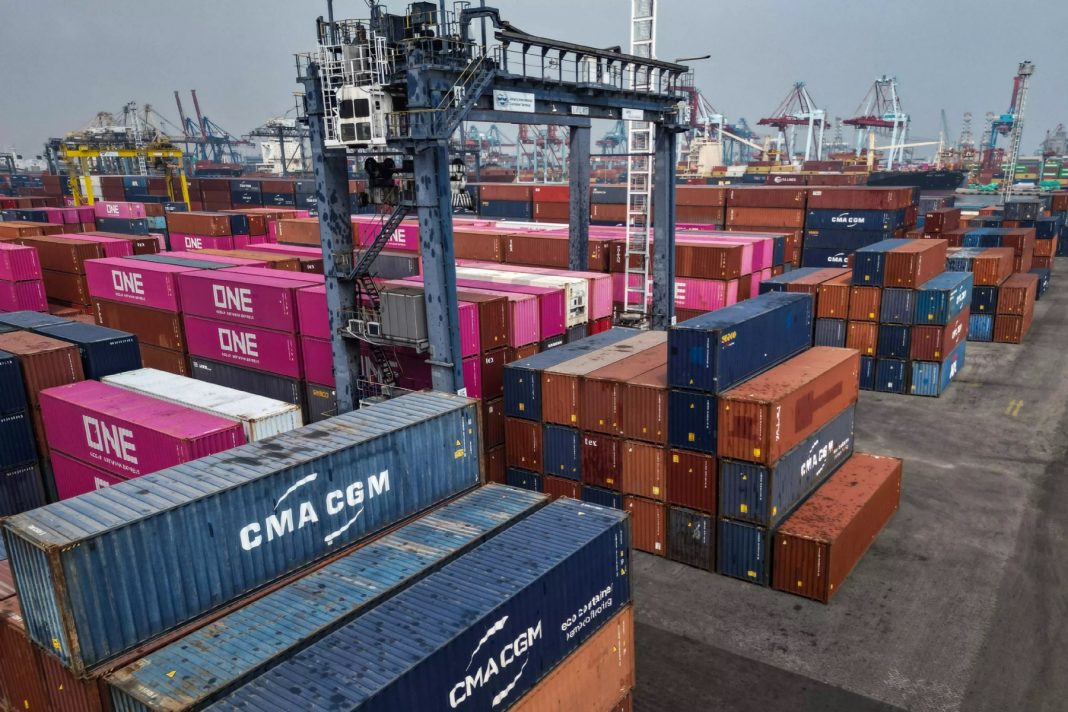
It is important to note that regional suppliers normally export their rice shipments through cargo containers.
These containers are transported by road or rail to major maritime ports before being dispatched across international waters to their final overseas destinations.
Under standard commercial practices, suppliers routinely book either a 20-foot container (1 TEU) or a 40-foot container (2 TEUs) to ship their consignments. However, under the current economic climate, exporting goods through this conventional container channel has lost its financial viability, leaving many businesses unable to absorb the escalated shipping expenses.
In response to this logistical bottleneck, some exporters are now relying on alternative breakbulk cargo arrangements directly from the ports. Nevertheless, breakbulk cargo shipping carries its own severe operational limitations.
These specialised vessels require a massive bulk consignment of at least 3,000 to 4,000 tonnes in one single shipment, making it an impractical choice for small or medium-scale exporters who lack such huge inventories. Furthermore, breakbulk cargo shipping services are simply not available for all rice-importing countries, further restricting market access.
Interestingly, a special variety of rice known as parboiled rice (also commonly referred to as converted rice) used to enjoy exceptionally high demand across many African and Gulf countries. Till recent past the export of parboiled rice from this region contributed nearly 40 per cent to the total overall exports originating from Nagpur.
Beyond the severe slump in grain shipments, the export of various other non-rice commodities has also suffered a noticeable setback, though their volumes have dropped comparatively less, falling by only 15 to 20 per cent.